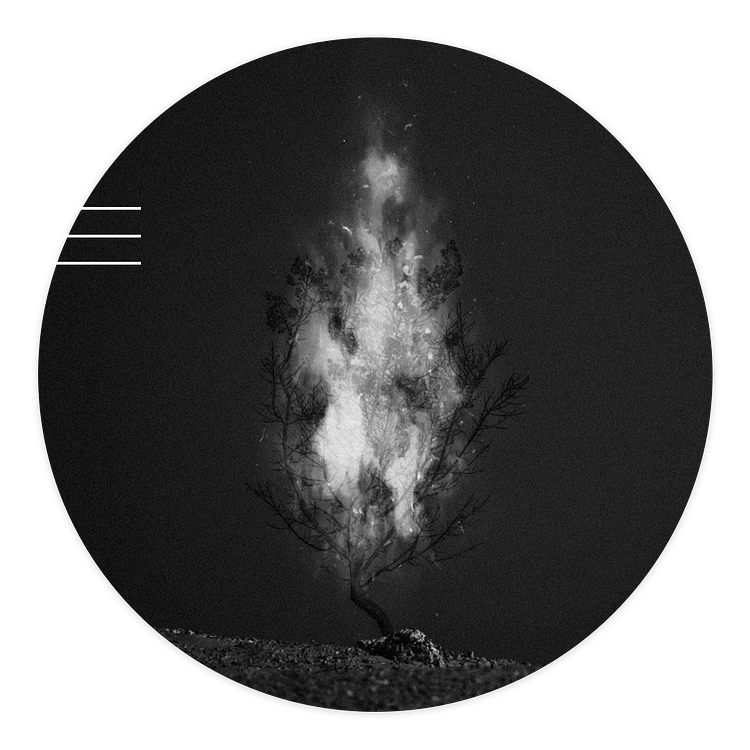
It’s so strange, it’s almost comical. At the same time, it is so strange, so unheard of, it’s much too unsettling, too beyond-this-world to laugh at. A shrub on fire in the middle of the desert. But no smoke. No blackening of the branches or leaves. No ozone. Ablaze, and unharmed.
We’ve heard the story so many times, that it helps to slowly re-imagine that pivotal scene from Exodus 3. Not only because it sharpens our scriptural imagination, but because it can also teach us something about God’s plan.
Early on in Christian meditation, art, and preaching, Mary the mother of Jesus is depicted as “The Burning Bush.” Why? The comparison sounds strange to many of us. But as early Christians read the Hebrew Scriptures, they began to see the burning bush as a prophetic symbol of the humble young woman who would be “overshadowed” by the Holy Spirit, the fire of God’s love, one day in Nazareth. The woman who would then carry within her, not just a message of deliverance, but the deliverer Himself.
But this great story doesn’t stop with Mary. Because on the Day of Pentecost, when God’s people received the gift of the Holy Spirit, “tongues of fire sat upon each of them,” yet they weren’t burned (Acts 2:3). But in a sense, they did burn! They were newly, brightly, dazzlingly alive to God’s purposes. And if they were “consumed,” it was with love, joy, peace, and the other fruits of the Spirit.
Mary was a prophetic symbol of what God’s whole people would be: deliverers of the message of salvation, and bearers of the Savior himself.
Fire is an important image in Scripture. It is always cleansing, going ahead of God’s work, and lighting up the darkness. From the burning bush, to the three Hebrew men delivered from Nebuchadnezzar’s fiery furnace, to Mary, to the Church, to the blazing glory of Christ’s return — even to our own prayer, meditation, and acts of worship — God’s fire burns. Instead of consuming or “using us up” in a negative sense, it makes “living sacrifices” (Rom 12:21) of our lives, while paradoxically filling us, making us whole.
In one sense, the burning bush — like Mary, like us — is completely passive. The miracle of transformation, power, and witness are done to it. We are set “on fire” with divine love, sometimes in intense experiences, but often slowly, over time. It’s all from God. But unlike bushes, we can make choices. Like Moses, we have to “turn aside, and see this great sight” (Exod 3:3). We have to take the time and trouble to enter God’s presence. And since we’re made in the image of God, when He sets us on fire, we burn even more brightly. Because we can choose, each day, to “turn aside and see” him in Scripture, in silence, in prayer, in our daily tasks and companions, we are an even greater mystery than the burning bush. We are a dazzling mystery that causes others to “turn aside and see” what God is doing, too.

About the author
Amber Noel
Amber Noel lives and works in Atlanta, Georgia, as a magazine editor and moonlights as an author of short fiction, non-fiction, and stage adaptations of novels. Find her podcasting on theology, arts, and Christian leadership here.