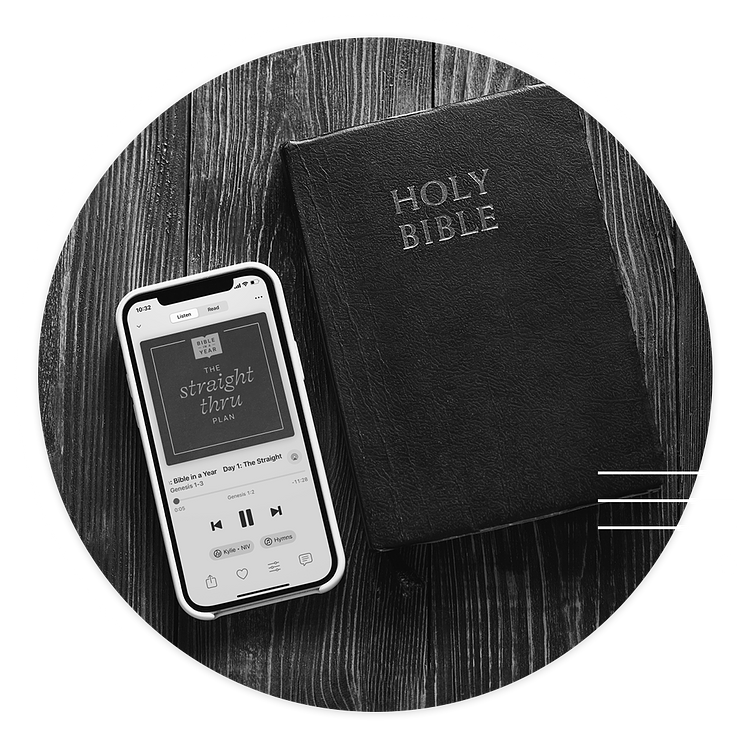
Psalm 119:105 says “Your word is a lamp to my feet and a light to my path.”
Clocking in at 176 verses, Psalm 119 is a long, elaborate meditation on the theme of God’s word. It follows an acrostic pattern, giving us an A to Z understanding of how to think about the Bible. The acrostic pattern makes it particularly useful for education and formation. In fact, the Protestant Reformer Martin Luther found in Psalm 119 an enduring pattern for Bible Study and theological reflection. He outlined this pattern in the preface to a collection of his theological writings known as the Wittenberg Edition of Luther’s German Writings. He outlined a three-step process that in Latin was called oratio, meditatio, tentatio. In English, these are prayer, meditation, and testing.
Many of us are familiar with meditation or study as a principal way to read the Bible. Martin Luther brackets this with prayer and testing, revealing a wide variety of ways to engage with Scripture. You can read it devotionally, which often involves seeking a daily word from God in and through his written word. You can read the Bible analytically – studying the context and nuance of each passage. You can even try lectio divina, or “spiritual reading,” which opens the biblical story through prayer and contemplation. This can be done individually or even in community. These are just a few of the many ways to read the Bible. But let’s now return to Luther’s sequence of prayer, meditation, and testing.
If you are looking for different ways to read the Bible, you need to know about the role that prayer and testing play in Bible study. Attentiveness to these will deepen and refresh your engagement with Scripture, and your life with Christ.
We begin with oratio – or prayer. This is highly significant. Martin Luther is not anti-intellectual, but he realizes our temptation to overly rely on our own intellect and natural ability, especially when reading the Bible. To resist this temptation, he says we must always begin with prayer. Psalm 119 is helpful in this regard, reminding us that the goal is not to impose our own understanding, but to instead hear and receive what God is saying. Luther says, “You should completely despair of your own sense and reason, for by these you will not attain the goal … Rather kneel down in your private little room and with sincere humility and earnestness pray to God through his dear Son, graciously to grant you his Holy Spirit to enlighten and guide you and give you understanding.” This returns us to the fundamentals of the faith. Start with prayer, asking the Lord to help you understand what you are reading. Some people think of prayer and Bible study as separate disciplines, but Luther helps us see us that they are intimately connected.
From prayer we move to meditation. Here, Luther invokes the image of a cow chewing its cud for how the Christian should be constantly meditating, reading, and studying the Bible. But then, he adds a unique step. After prayer and meditation comes tentatio – the testing. In other words, Luther doesn’t remain cloistered in a private little room or in a monastery. Our prayer and study must engage and impact our real lives. There is a kind of difficulty, testing, and temptation that is an essential part of the formation process. Luther says that this real-life struggle is what “teaches you not only to know and understand but also to experience how right, how true, how sweet, how lovely, how mighty, how comforting God’s word is: it is wisdom supreme.” How interesting!
When we find Bible study growing stale, our first instinct shouldn’t be a new avant-garde method of study. Instead, the best way forward is to begin living out and applying what we have taken the time to faithfully learn. Then, it will be tested and refined in the crucible of our lives and through the work that God has given us to do.
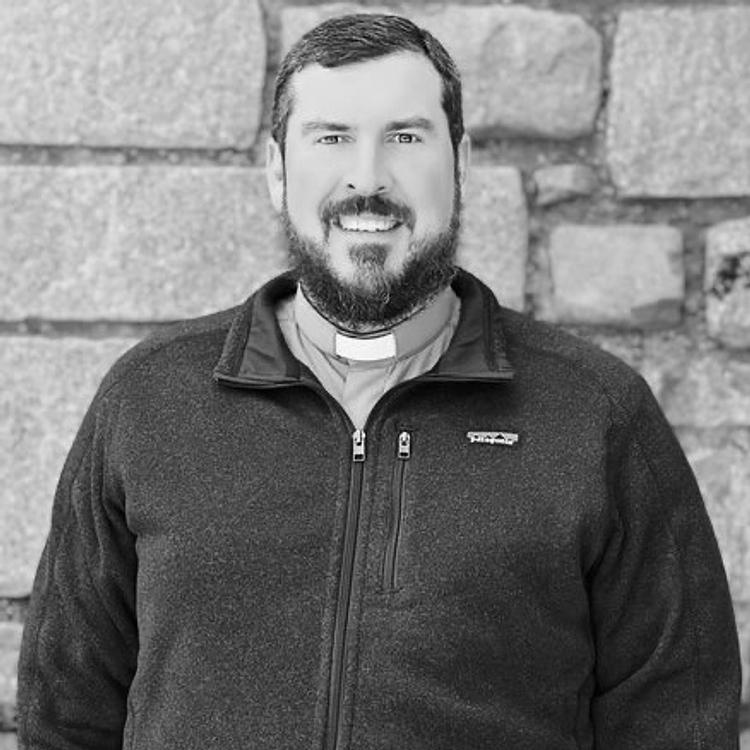
About the author
Daniel Adkinson
The Rev. Daniel Adkinson serves as the founding rector of St. Thomas Anglican Church in Athens, GA. Prior to moving to Athens to plant St. Thomas, he served for almost a decade at Christ Church in Plano, TX. He is married to Holly and they have two children. Daniel and Holly met while in college at the University of Georgia. So, they love being back in the Classic City!